Independent certification for Australian businesses
The Australian trust mark for responsible AI
Human-reviewed certification against Australia's AI Ethics Principles. Show your AI has been independently reviewed.
Buying AI? Check if your provider is certified.


Celebrating the Australian businesses leading responsible AI


Every mark is earned through independent assessment. Explore the public register
How it works
Four steps to the Responsible AI Certified Mark.
Apply, get reviewed, pay only on approval, and receive your mark. Most certifications complete in two to four weeks.
Apply online
Answer 12 plain-language questions about how you use and govern AI, then sign the Pledge. Under 20 minutes, no cost to apply.
Human-reviewed
An independent Assessor reviews your responses, with a follow-up call if anything needs clarifying.
Payment
Pay only after approval. Tiered pricing scaled to your business size, from startups to enterprise.
Badge issuance
Receive your Certified Mark, certificate PDF, and a public listing in the Responsible AI Australia register.
Tiered pricing for startups, SMEs and enterprise. See the full process, day by day, and what we ask.
The trust gap
Australians are using AI. They don't trust the businesses using it.
Adoption went up. Trust did not follow. And almost no Australian business can show a customer, a buyer or a regulator that its AI is governed. That gap is where deals are lost, and it is the gap certification closes.
69%
of Australian small businesses use AI regularly[1]
Up from 40% in July 2024. Adoption nearly doubled in 18 months.
36%
of Australians are willing to trust AI[2]
78% are concerned about negative outcomes. 46% think the risks outweigh the benefits.
12%
of Australian organisations can show they govern AI at a leading level[3]
58% say they have human oversight in place. 23% have actually implemented it.
Where Australians draw the line
What distrust does to revenue
20%
switched to a competitor they believed handled AI data more responsibly[6]
Trust in how AI handles data decides where the money goes.
52%
will pay more for brands that are transparent about how they use AI, an average premium of 7%[6]
Transparency is priced in, not just preferred.
Global figures from a seven-market survey that did not include Australia.
Closer to home. In October 2025 Deloitte agreed to partially refund a $440,000 Commonwealth report after fabricated references were found in work produced with a generative AI toolchain.[7]
Your customers take your word for it.
Your AI claims are self-declared. A buyer's supplier questionnaire, a tender panel or a cautious customer has nothing independent to check.
An independent reviewer already checked.
A human assessor verified your practices against Australia's AI Ethics Principles. Anyone can confirm it on the public register in seconds. 13 Australian businesses have already crossed.
What the 2027 law does and does not do for you
Others will tell you the Australian Standards for AI are about to bind every business. They are not, yet. Here is the accurate version, because being the accurate one is the point.
- The Standards bind the labs. On 8 October 2026 the Government said frontier AI developers will have to prove their safety systems work, with standards finalised by the end of 2026 and legislation in 2027.[8]
- The disclosure rules bind you. From 10 December 2026 the Privacy Act requires covered businesses to disclose automated decision-making in their privacy policy.[9]
- Your buyers bind you now. Suppliers under whole-of-government arrangements must already advise of any plans to use AI, and corporate supplier questionnaires are following.[10]
Sources for every figure above, verified 20 October 2026
- [1]Intuit QuickBooks, AI Impact Report Australia 2026, May 2026. 3,790 Australian small and mid-sized business owners and operators, part of a four-country study of 34,364.
- [2]KPMG and the University of Melbourne, Trust, Attitudes and Use of AI: A Global Study 2025 (Australia snapshot), April 2025. 48,340 people in 47 countries, including Australia, surveyed November 2024 to January 2025.
- [3]Fifth Quadrant for the National Artificial Intelligence Centre, Australian Responsible AI Index 2025, 2025. Survey of Australian AI decision makers, maturity scored across responsible AI practices.
- [4]Office of the Australian Information Commissioner, Australian Community Attitudes to Privacy Survey 2026, May 2026. 1,511 Australians aged 18 and over, nationally representative, fieldwork March 2026.
- [5]Adyen Index 2026, Australia, July 2026. 2,012 Australian consumers aged 18 and over, fieldwork March to April 2026.
- [6]Usercentrics, The State of Digital Trust 2026, June 2026. 11,000 consumers in the UK, USA, Germany, Spain, Italy, the Netherlands and Sweden. Not an Australian sample, and published by a privacy-technology vendor.
- [7]Cyber Daily, reporting the Department of Employment and Workplace Relations, October 2025. Deloitte agreed to partially refund a $440,000 Commonwealth report after fabricated references were found; Deloitte confirmed a generative AI toolchain was used.
- [8]ABC News, Australia outlines plans to make AI companies prove their safety systems work, 8 October 2026. Report of the Assistant Minister's Sydney speech setting out the Australian Standards for AI.
- [9]Office of the Australian Information Commissioner, transparency for AI and automated decision-making, September 2026. Regulator guidance on the Privacy Act obligation commencing 10 December 2026.
- [10]The Canberra Times, reporting the Australian Public Service AI plan, November 2025. Suppliers under whole-of-government arrangements must advise of any plans to use AI.
What you get
What certification actually gives you.
Not a sticker. An independent assessment you can point to, a mark you are licensed to use, and a claim that both people and AI agents can verify for themselves.
Verifiable by machines, not just people
Yours is the first Australian AI ethics certification that machines can verify. AI agents, search engines and procurement systems can confirm your status in milliseconds through a free verification API, a signed W3C Verifiable Credential and an MCP server, without a human in the loop.
Independently assessed, not self-declared
A human assessor reviews how you use and govern AI against the eight Australian AI Ethics Principles and assigns a tier. You are not grading your own homework, and anyone who reads the mark knows it.
Anyone can check it in seconds
Your public register profile, certification ID and verification link are open to customers, partners and journalists. The live seal on your site stops displaying on its own if certification lapses, so the claim is always current.
A certification mark you are licensed to use
The Responsible AI Certified mark is the subject of Certification Trade Mark application No. 2482971 with IP Australia, currently pending. Certification licenses you to display it for 12 months on your website, proposals, tenders, reports and recruitment, in the approved forms.
An answer when a buyer asks how you govern AI
Suppliers under whole-of-government arrangements must advise of plans to use AI, and supplier questionnaires increasingly ask the same. Certification gives you an independent assessment and a verification link to cite in your response, instead of a paragraph you wrote yourself.
In your kit
Register profile, certificate PDF, verification link
Source: The Canberra Times on the APS AI plan, Nov 2025Learn moreOn the record before the Standards arrive
Your certification ID carries its issue year. A business certified now keeps that date on its public profile when the Australian Standards for AI are legislated, which the Government is targeting for 2027.
One annual licence, from $349. No cost to apply, and you pay only after approval. Certification Rules
If AI helps make decisions about people, your privacy policy must soon say so.
Australia's Privacy Act now requires transparency about automated decision-making. From 10 December 2026, businesses covered by the Act must disclose in their privacy policy the automated decisions they make and the personal information behind them. Our assessment asks how you disclose it, and our free builder helps you draft it.
The decisions
The kinds of decisions made solely by automated means, from loan approvals to resume screening to insurance risk.
The assistance
The kinds of decisions where a computer program substantially assists, even when a human signs off at the end.
The information
The kinds of personal information those programs use to make or shape decisions about people.
New to the obligation? Start with the plain-language guide, then check whether your systems are covered.
Time until disclosure is required
Our assessment asks how your business discloses automated decision-making. It is not legal advice and not evidence of compliance. Our free disclosure builder helps you check whether the obligation applies and draft the wording.
Applies to organisations covered by the Privacy Act 1988, generally those with annual turnover above $3 million plus some smaller entities. Responsible AI Australia is an independent certification body, not a government authority. See the OAIC guidance for how the requirement applies to you.
AI Industry Tracker
Know the AI rules for your industry
There is no single AI Act in Australia. There are court practice notes, regulator letters, prudential standards and privacy deadlines, and they differ by sector. We track them all, in plain English, with every entry linked to its official source.
Australia's Mark of Leadership in Responsible AI
Three certification tiers, designed to meet businesses where they are today and grow with their responsible AI maturity. Your tier is assigned through independent assessment of your application, so the mark always reflects practice, not self-selection.
Commit
The entry tier.
Awarded to businesses that publicly commit to responsible AI by signing the Responsible AI Pledge. The starting point for organisations beginning their ethical AI journey.
Embed
From intent to practice.
Awarded to businesses operationalising responsible AI through a Responsible AI Policy integrated into daily operations, on top of the Pledge.
Govern
The leadership tier.
Awarded to businesses leading with a full Responsible AI Governance Framework, including risk management, oversight roles, impact assessments and accountability mechanisms aligned with the Australian AI Ethics Principles.
Not sure where to start? Speak with the team and we'll help you find the right starting point.
Australia's first · Machine-verifiable certification
Humans see a badge.
AI agents see proof.
More and more buying decisions are made by AI assistants acting for people, and an agent cannot see a badge image. Every certification now includes a free verification API, a cryptographically signed Australian AI Trust Credential and a live trust seal, so any AI agent can confirm your certification in milliseconds.
See it verify liveGET /api/v1/verify?domain=yourbusiness.com.au
{
"certified": true,
"status": "active",
"tier": "Govern",
"certId": "RAIA-2026-0009",
"expiresAt": "2027-02-01"
}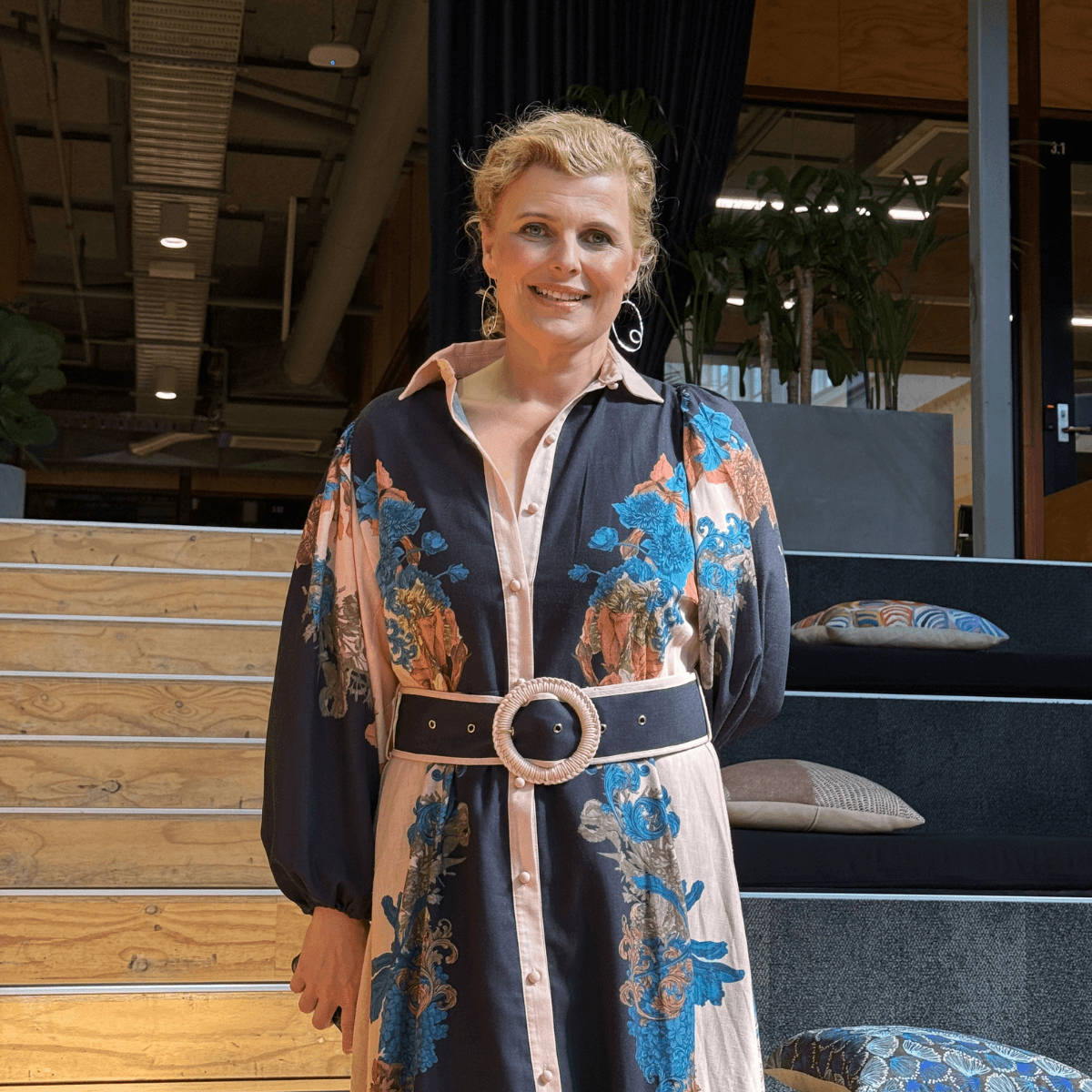
Jo Thomas
CEO & Co-founder, Enrola
Client story • Enrola
Trust is, in effect, the product. If consumers can't trust that they are being treated fairly, and our clients can't trust that the agent speaking under their brand is transparent and accountable, nothing else we do holds up.
Enrola builds AI sales agents for high-consideration decisions like enrolling in a degree or choosing insurance cover. The company chose certification to hold itself to an independent standard, not to mark its own homework.
Read the case study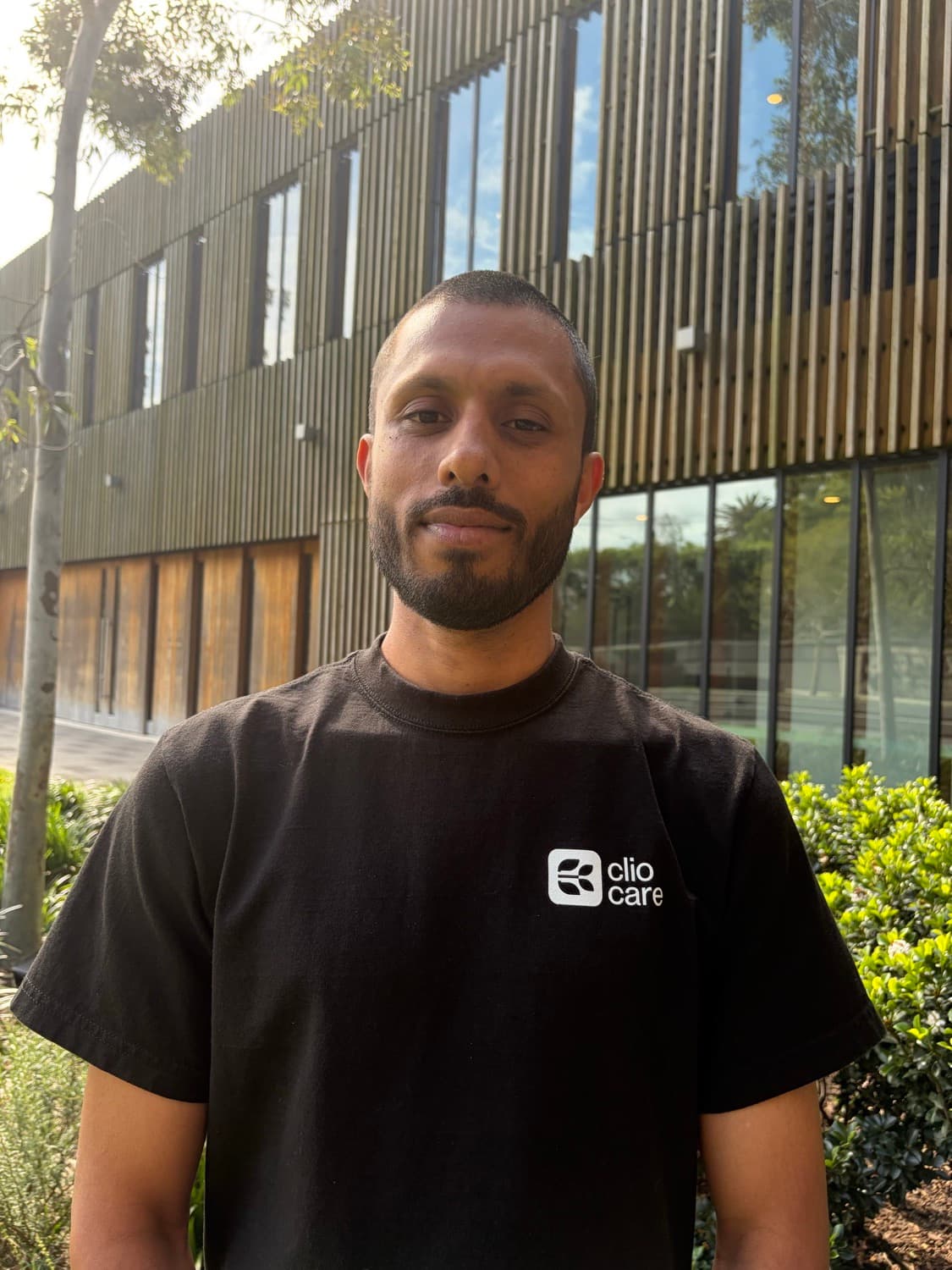
Kavinda Perera
Founder, Clio Care
Client story • Clio Care
An AI that fills in details the worker never saw isn't saving time, it's creating risk. We built Clio so every note contains only what actually happened, and we test that before every release.
Clio Care turns a support worker's own account of a shift into an NDIS progress note. The first NDIS software business certified, at the Govern tier, it publishes a standard that anyone can test on any AI note tool.
Read the case studyThe AI Incident Exchange
When an AI lets you down, report it.
Aviation became the safest way to travel because every near-miss got reported and the patterns got fixed. Australia's first public channel for AI incidents and near-misses brings that idea to AI, so problems get found before they spread.
Did one of these happen? Tap it to start.
- Lost money
- Sent to a scammer
- Wrong information
- No human to fix it
- Privacy breached
- Unfair treatment
- Something else
- Confidential
- About five minutes
- No account needed
We publish patterns, never your report. If you need your problem fixed, we point you to the bodies that can.
For individuals
Join the Movement for Responsible AI
For any Australian who uses, develops, or deploys AI
It only takes 2 minutes to make your commitment to responsible AI
Latest insights
Thinking on responsible AI from our team

The Privacy Act's Automated Decision-Making Disclosure. What to Write Before 10 December 2026
From 10 December 2026, privacy policies must disclose the decisions computer programs make or shape about people, AI included, even when a person signs off. The three-limb test, the three required lists, and a free builder.
The State of the Models. Every Frontier AI, Measured and Compared
Our continuously updated benchmark tracker. Compare Claude, GPT, Gemini, Kimi and DeepSeek on science, coding and maths, and see how close open-weight models have come to the private frontier.
ASIC Report 798, Two Years On. What ASIC and APRA Now Expect of AI Governance in Financial Services
No AI statute governs Australian banks, insurers, super funds or advisers, and both regulators have decided they do not need one. REP 798, APRA's AI letter, CPS 230 and the 10 December 2026 deadline, and what a board should be able to produce on request.
Frequently asked questions
It is an independent, human-reviewed trust mark for Australian businesses that use or build AI. We assess your AI practices against the eight Australian AI Ethics Principles, assign one of three tiers (Commit, Embed or Govern) and list your business on our public register.
The result is a verifiable signal to customers, partners and investors that your AI is used responsibly, backed by an assessment rather than a self-declared claim.
Any Australian business that uses AI in its operations or builds AI products for others. You need an Australian Business Number (ABN) and to operate primarily within Australia.
If your business uses AI for decision-making, customer interactions, content or automation, certification demonstrates your commitment to responsible practices.
If you build or deploy AI for clients, certification shows your work has been assessed against the Australian AI Ethics Principles.
International businesses with Australian operations can contact us to discuss eligibility.
No. Responsible AI Australia is an independent certification body, not a government agency.
Our program is built on the Australian Government's AI Ethics Principles and is designed to anticipate where Australian AI regulation is heading, including evolving guidance from the Department of Industry, Science and Resources.
Certifying now means your practices have been independently reviewed before responsible AI practices become mandatory, particularly in high-risk areas.
Pricing is based on the size of your organisation. It starts at AUD $349 per year for teams of one or two people and scales to AUD $1,499 per year for organisations with more than 200 employees.
You only pay after your application is approved, so there is no cost to apply.
See the full pricing breakdown
Apply through our website with your business details and ABN, upload your logo and complete a short questionnaire: 12 plain-language questions about how you use and govern AI. Simple answers will not disqualify you, and guidance is provided for every question. You then sign the Responsible AI Pledge.
An independent assessor reviews your application and may request a short video call. We assign your tier, and once payment is made your certification is issued and your profile appears on our public register.
The process typically takes two to four weeks.