Case Study
How Enrola Made Responsible AI a Competitive Advantage
How an Australian AI sales platform turned responsible AI certification into a foundation for enterprise trust.
Client

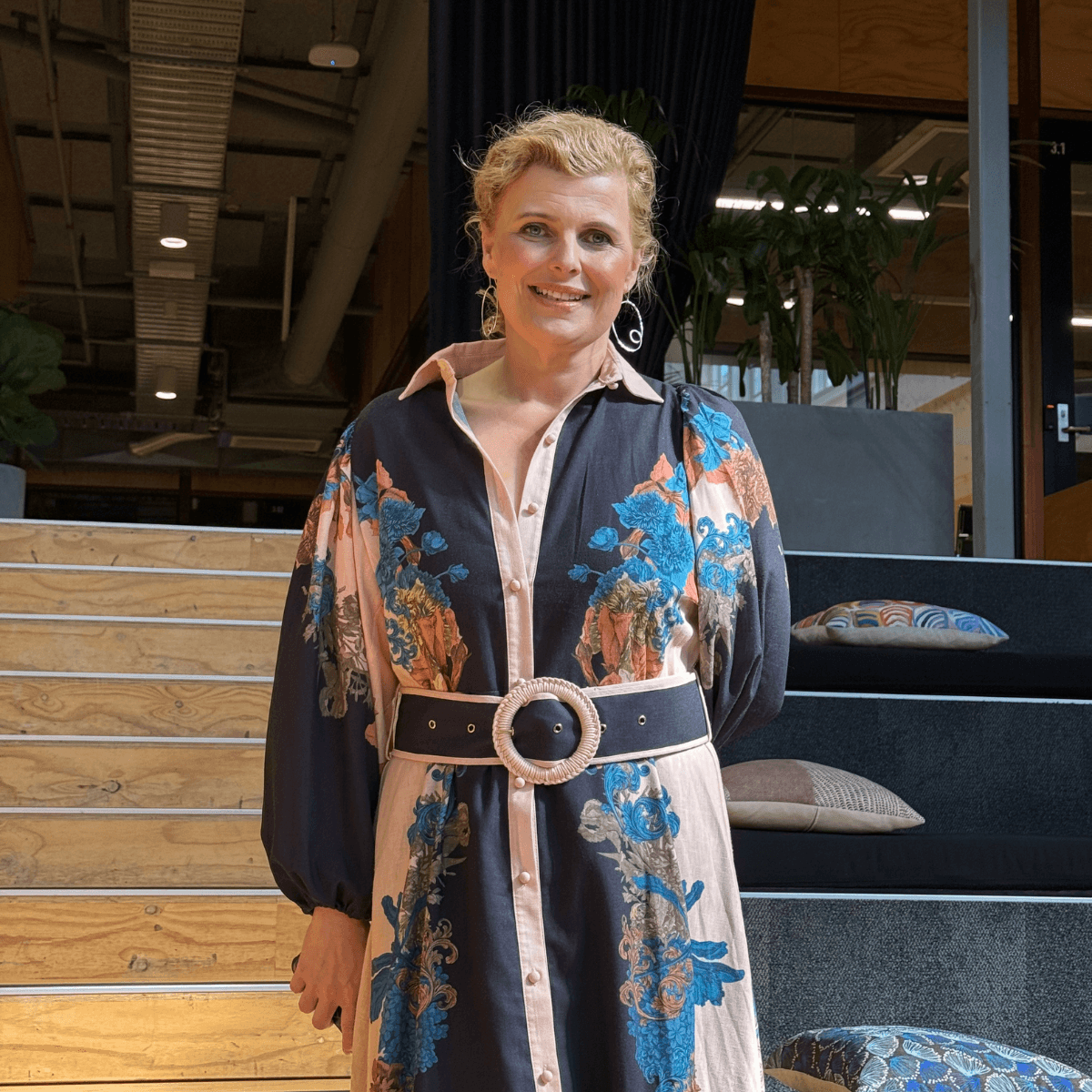
CEO & Co-founder
Jo Thomas
Industry
Conversational AI (high-consideration B2C)
Certification tier
Commit
When a prospective student in Australia is weighing up which vocational course to enrol in, or a household is comparing insurance cover for the first time, the decision is rarely impulsive. There is money on the line, often a lot of it. There are consequences that play out over years. There is, almost always, a long stretch of considering, comparing and second-guessing before anything is signed.
This is the territory Enrola operates in.
Co-founded in 2024 by CEO Jo Thomas and CTO Yvette Quinby, the Brisbane-based startup builds AI sales agents that hold genuine, text-based conversations with consumers on behalf of its clients' sales teams. Across education, insurance, telecommunications and healthcare, Enrola's agents answer questions, qualify interest, work through objections and book appointments with human advisors. The conversations happen on SMS and messaging channels, asynchronously, over days or weeks. They look and feel like the kind of patient, knowledgeable follow-up a great salesperson would do, except they run at scale and without the constraints of a working day.
It is also exactly the kind of AI use case that, done carelessly, would attract regulatory attention quickly.
Which is why Enrola pursued certification with Responsible AI Australia.
Why certification mattered
For Jo Thomas, the decision to seek independent certification came down to a simple recognition.
“Enrola puts AI directly into conversations with consumers who are making significant, high-consideration decisions: enrolling in a degree, choosing insurance cover, switching a utility or a financial product. The person on the other end of those messages has real money and real consequences on the line, so automating that contact at scale carries a genuine responsibility.”
“Pursuing certification was about holding ourselves to an independent standard rather than marking our own homework. Responsible AI matters to us because trust is, in effect, the product. If consumers can't trust that they are being treated fairly, and our clients can't trust that the agent speaking under their brand is transparent and accountable, nothing else we do holds up.”
That instinct, that trust is the product rather than a feature of the product, is the strategic posture that runs through everything Enrola has built.
Responsibility built into the architecture
Many AI vendors describe their ethical practices as something layered on top of the product. Enrola's approach is structurally different. Responsibility shapes how the agents operate at the conversational layer itself, not as a filter applied to outputs after the fact.
“Enrola's platform uses AI agents to hold genuine, text-based conversations with leads on behalf of our clients' sales teams, answering questions, qualifying interest and booking appointments with human advisors. Responsibility is built into how those conversations happen, not added afterwards. We build compliance guardrails for each industry, there is meaningful human oversight of how the agents perform, a person can always step in where a conversation calls for it, and we don't use protected characteristics in how leads are handled. We treat the data trusted to us with care, and we don't train models on our clients' data.”
That last point matters more than it might first appear. In a market where the commercial pressure to use customer data for model improvement is intense, choosing not to is a real constraint. Enrola has made it a deliberate part of its proposition: the data that flows through its agents stays with the client whose customers generated it.
Three audiences, three forms of value
Asked what Responsible AI Australia certification delivers in practice, Thomas frames the value as operating across three distinct audiences.
The first is internal.
“For us, certification provides both discipline and an honest signal. It keeps our governance and oversight in good order as we scale, and it has become a meaningful differentiator when enterprise clients assess who they trust with their customers.”
The second is client-facing.
“For our clients, it offers real assurance. They are handing us a sensitive part of the customer relationship, and certification gives them confidence that the AI representing their brand is governed responsibly.”
The third is at the level of the industry itself.
“For the industry, AI in direct conversation with consumers is still new and only lightly regulated. Certification helps set a baseline of good practice and shows that responsible self-regulation can work while formal frameworks catch up. The more providers that commit to an independent standard, the more public confidence there will be in the category, which benefits everyone building in this space.”
It is an unusually mature view for an early-stage founder to hold. Most startups treat industry-wide concerns as someone else's problem. Enrola is acting as though the credibility of its category, conversational AI in high-consideration sales, is part of what it is building.
Why this matters for the wider market
Enrola's certification matters beyond Enrola.
Conversational AI is one of the fastest-growing categories of enterprise AI deployment in Australia. The uptake has been significant enough to draw sustained regulatory interest, including a submission from ASIC to the Senate inquiry on the uptake of AI technologies in Australia. Regulators are now paying close attention to how AI is described to consumers. ASIC has signalled that it is turning its focus to AI-washing, the practice of overstating or misrepresenting AI capability. The maximum penalties for misleading conduct under the Australian Consumer Law are already significant: the greater of $50 million, three times the benefit obtained, or 30 per cent of adjusted turnover. And the people most exposed to these tools, ordinary Australian consumers making meaningful financial decisions, are doing so largely without realising who, or what, they are talking to.
Against that backdrop, the choice an early-stage company makes about how seriously to take responsibility carries weight beyond its own operations. Every certified business establishes a slightly higher floor for what the market should expect.
Enrola has chosen to set that floor high.
For Australian enterprise buyers evaluating conversational AI for customer-facing roles, that choice has become a useful filter. The question is no longer just whether a vendor can build the agent. It is whether the vendor can demonstrate, independently, that the agent has been built responsibly.
That is the standard Responsible AI Australia certification was designed to make legible.
It is also the standard Jo Thomas and the Enrola team are now publicly committed to.
Responsible AI Australia certifies Australian businesses across three tiers, Commit, Embed and Govern, recognising progressive levels of commitment to ethical and responsible AI practice. To learn more about certification, get in touch.
About the client

Enrola is a Brisbane-based conversational AI platform that builds AI sales agents for high-consideration B2C industries, including education, insurance, telecommunications and healthcare. Led by CEO and co-founder Jo Thomas, Enrola is certified at the Commit tier with Responsible AI Australia.