Responsible AI Australia
Who Dares to Halt?
Notes from my keynote at the APEC Tech for Good Workshop in Shenzhen, on brakes, aeroplanes, and the question nobody in AI wants to own.
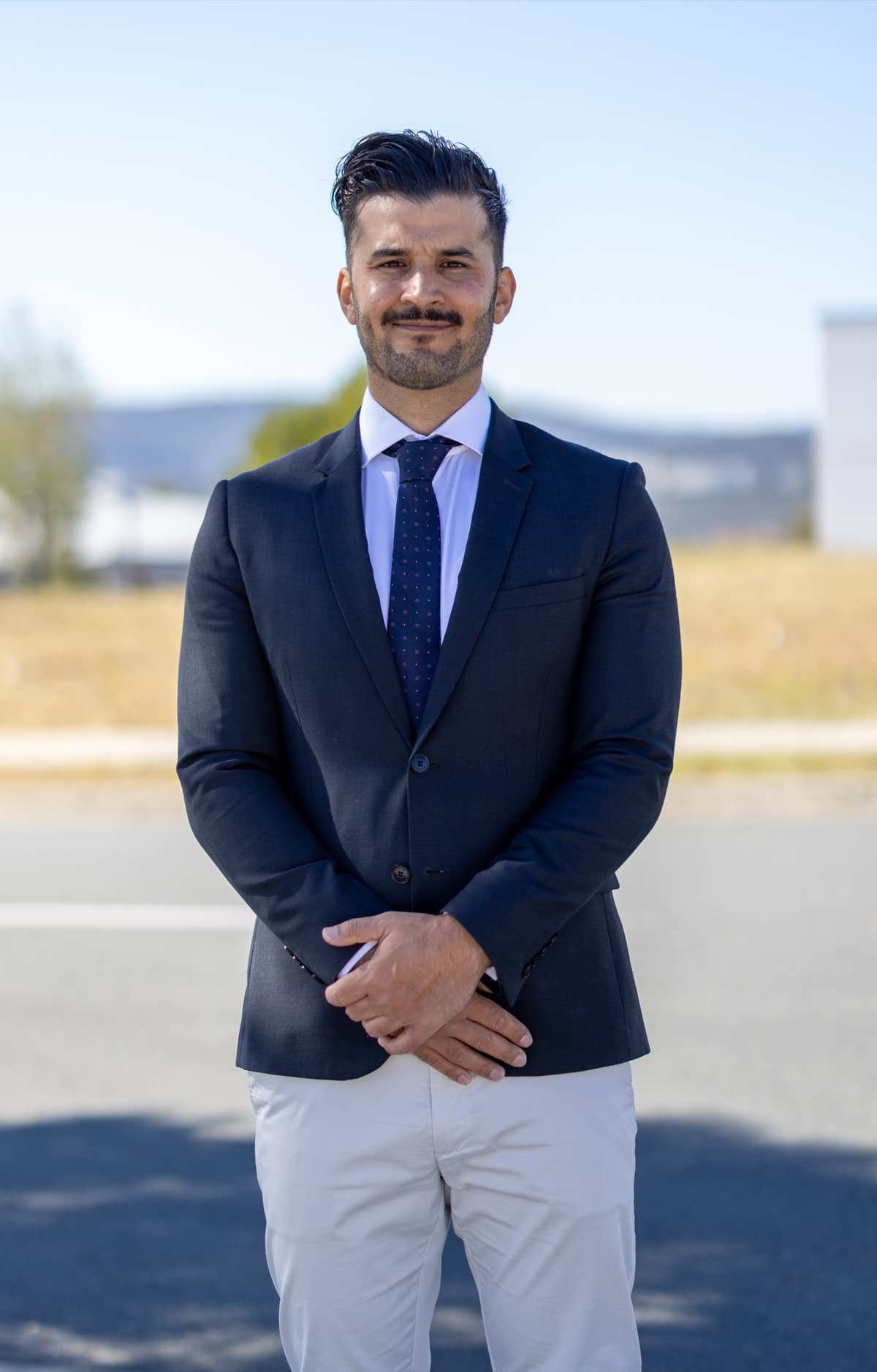
Syed Mosawi
July 18, 2026 • 8 min read
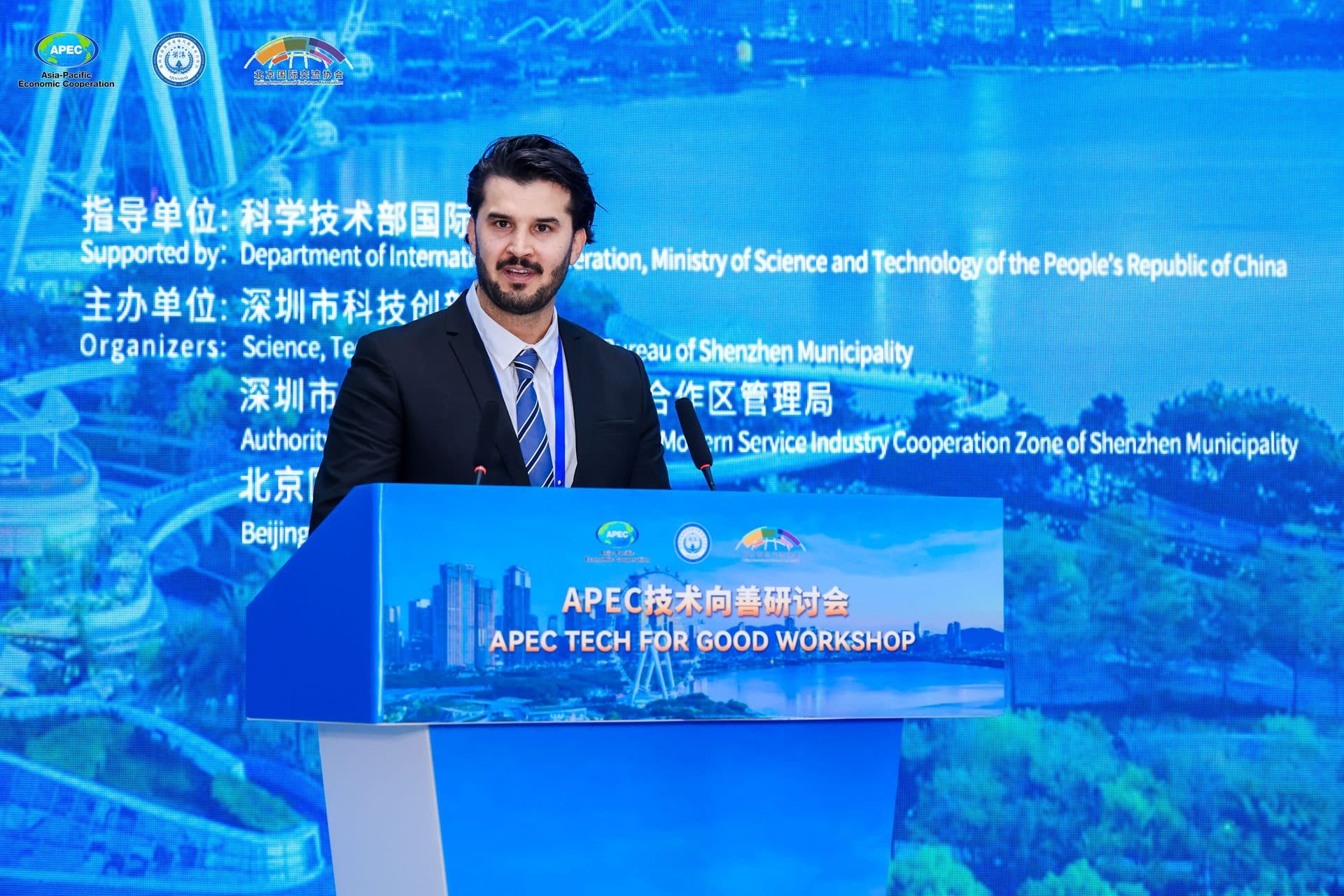
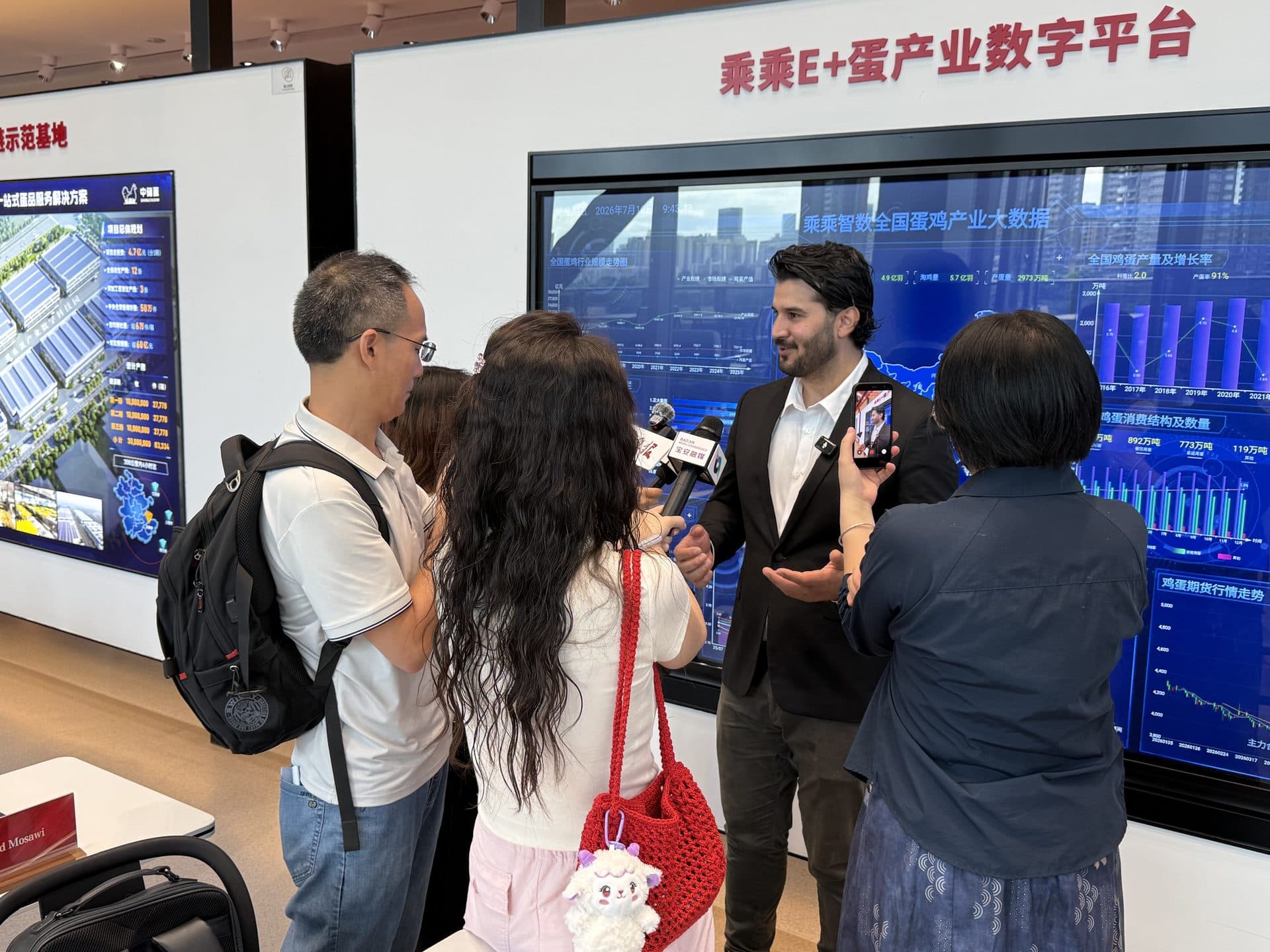
Shenzhen does not do slow. The city that assembles your phone, your drone and probably your next car moves at a pace that makes an Australian planning approval look geological. Which is why there was something quietly wonderful about flying there this month to sit on a panel about brakes.
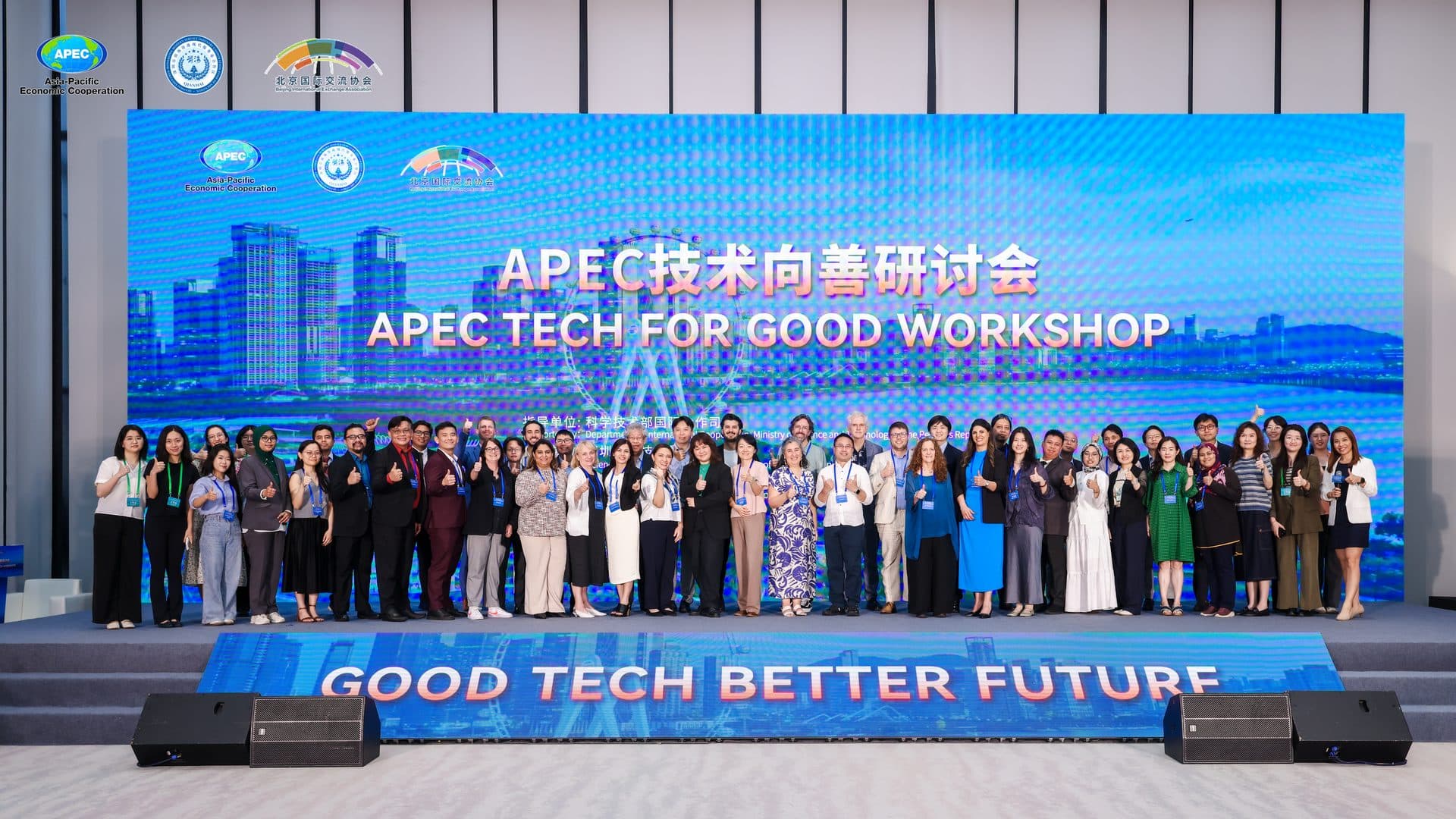
The occasion was the APEC Tech for Good Workshop, three days in July that gathered delegates from seventeen APEC economies, organised by Shenzhen's science and innovation authorities with the support of China's Ministry of Science and Technology. My session carried the most honest title on the program. Technology moves too fast. Regulation moves too slow. Can ethical review apply the brakes?
Two clocks, one gap
The numbers behind that title deserve to be spelled out. A legislative cycle takes three to five years. A generation of AI capability now turns over in about three months. In the gap between those two clocks, somebody is deciding what ships, and the question our session kept circling was who. Do we rely on companies to discipline themselves, or do we put someone outside the building in the loop? And then the version of the question that nobody in any country has properly answered. If an ethical review finds a serious risk the week before launch, who actually has the power to stop the launch? If stopping it costs millions, who dares?
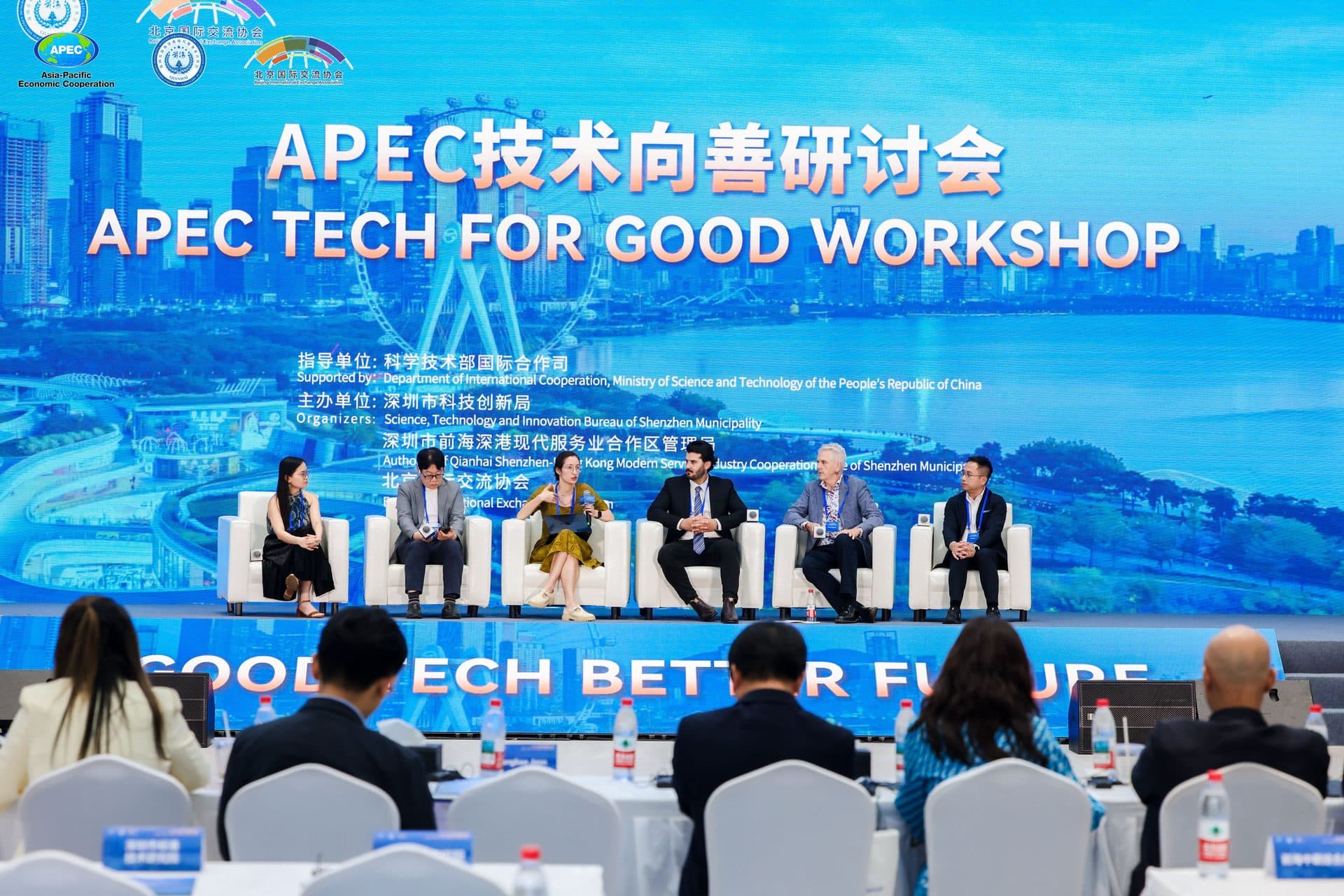
I shared the stage with people who come at that question from completely different directions. Our moderator Kerry McInerney lectures in AI at the University of Auckland and researches AI ethics at Cambridge. Charmaine Distor works on public sector AI for a United Nations University unit in the Philippines. Jeon Chang-bae chairs Korea's International Association for AI and Ethics. Rob Sparrow is a philosopher at Monash who has spent decades on the ethics of machines. Dixon Siu does AI governance inside Fujitsu in Japan. And I run a certification scheme in Australia. Between us we had academia, government, industry and assurance, and we had agreed beforehand to anchor every talk in a single technology. Deepfakes, because nothing stress tests an ethics process like a tool that is cheap, convincing and already everywhere.
The technology does not draw the line
Deepfakes are where the old defence that technology is neutral goes to be tested. The same synthesis that powers a romance scam can put a public health message into forty languages and reach millions of people who would otherwise be excluded. The capability is identical. The outcomes could not be further apart. So where exactly is the line, and who holds the pen?
The technology does not draw the line. People do.
Rob made the point that ethical review exists to steer progress, not to strangle it, and the room agreed more than it argued. The harder conversation was about teeth. Everyone accepts that legislation lags. The usual answer is that industry guidelines can fill the gap. But a guideline without enforcement is a better written promise, and the panel question put it bluntly. Should guidelines come with real veto power, or do they just buy companies the appearance of responsibility while regulation catches up?
The two least popular words
My keynote was built around the two least popular words at any technology conference. Not yet. I told the room I am two people at once. A registered patent and trade marks attorney, trained to move slowly and check the brakes for a living. And a founder, who ships, who moves fast, who wants to floor it. Both halves of me argued on that stage, and the case they settled on together is the one I want every builder in that room to remember. The brakes are not the enemy of the car. The brakes are the reason you are allowed to drive fast at all.
To make it concrete I borrowed an argument from Dario Amodei, who runs Anthropic and is building frontier AI as fast as anyone alive, which is exactly why it matters that he is the one asking for brakes. His proposal is that frontier models, like aircraft, should pass independent testing before release, with the power to block or reverse a launch that fails. Then I asked the room to think about how they got there. Every one of us flew to Shenzhen, and not one of us was afraid to board. Not because planes are simple, but because we know, without thinking about it, that someone with authority tested that aircraft and had the power to say not yet. The testing did not kill aviation. The testing is the reason we fly. Nobody calls it anti-innovation. We call it the reason the plane lands.
A car with no brakes is not fast. It is just a crash that has not happened yet.
So between corporate self-discipline, which is a company grading its own homework, and legislation that arrives a decade after the damage, I argued for the third answer. Independent ethical review before launch, by someone with no stake in shipping and the standing to say not yet. Not forever. Not a founder marking his own exam. Not a parliament arriving after the harm. A human in the loop, with authority, checking the aircraft before it carries passengers. That is not the brake that stops the car. It is the brake that lets you take the corner at speed.
I brought Garry with me
To show the room what is actually at stake, I told them about Garry, the retiree I met last year who was trapped by an automated service line that would not understand him and would not hand him to a human. He escaped because thirty years in public life left him with thirty years of phone numbers. Readers here have met Garry before. The room in Shenzhen had not, and the story landed the way it always lands, as a laugh and then a silence. Because Garry could pay that price and most people cannot. Eighty-nine per cent of people want a human option to always be there. Only thirty-eight per cent say the handover actually happens. The rest are knocking on a door that was painted on, and the next person in that loop will not have his phone numbers. They should not need them.
I closed the talk with the four words my work rests on. Witness, conviction, action, humility. Once you have seen the harm, you are a witness and you cannot un-know it. Conviction is being willing to say no out loud, in rooms like that one. Action is the whole point, because a witness is worthless unless it becomes action. And humility, because I once rescued a tortoise off a Queensland road by carrying it back the way it had come, and sent it across the deadliest stretch of bitumen in the district a second time. I came to save it and nearly killed it. Safeguards can misfire too, which is why whoever holds the brakes should be independent, careful and humble about it.
In the discussion afterwards I added the point I bring to every stage. All of these brakes, review boards, certification, regulation, depend on a person noticing something is wrong, and no regulator can sit inside every business. The most distributed safety system a country has is its people, and it only works if they are AI competent, able to understand what these systems can and cannot do, harder to scam, quicker to spot harm, and equipped to use AI to solve their own problems rather than waiting to be rescued from it.
One standard for seventeen economies?
The discussion question I found hardest was whether APEC could ever write one AI ethics standard that fits every market. Sitting between colleagues from Korea, Japan, the Philippines and New Zealand, the honest answer felt obvious. No, and we should stop pretending otherwise. Values differ, legal systems differ, and a standard written for everyone ends up binding no one. The workable path is to design for divergence and aim for recognition, the way certification marks already work across borders. Let each economy set its own bar, publish it, and recognise each other's marks where the bars align. That is a system seventeen economies could actually build, and it is the system I went to Shenzhen to argue for.
What I brought home
If one word ran through all three days, in every accent and every session, it was trust. Seventeen economies disagreed about plenty, about standards, about speed, about where the lines belong, but nobody disagreed about this. People board the plane because they trust the system that checked it, and people will only board this technology the same way. Trust is not the reward you collect after the technology succeeds. It is the runway the technology takes off from, and it has to be built deliberately, by someone, before the passengers arrive.
I flew out of a city that builds the future faster than anywhere on earth, back to a country that has just put a date on legislating its own AI standards. Every economy in our region is wrestling with the same gap between the speed of the technology and the speed of the law, and the ones that thrive will be the ones that build trust and competency while they wait for legislation, not instead of it. The coverage of the workshop led with equity, and that is the right instinct. The benefits of AI will not spread themselves, and neither will the safeguards.
The session asked whether ethical review can apply the brakes. That was never quite the question. The question is who dares to halt. Let it be one of us.
Syed Mosawi
Syed Mosawi is the founder of Responsible AI Australia and a registered trade marks attorney. He built Australia's certification trade mark scheme for responsible AI, assessing businesses against the Australian AI Ethics Principles across three tiers. Commit, Embed and Govern.
Written by a human.