
From the founder • 17 June 2026
The Friction Tax
I met Garry tonight. By the end of the evening he had taught me more about responsible AI than most policy papers manage in forty pages, and he did it while making me laugh.
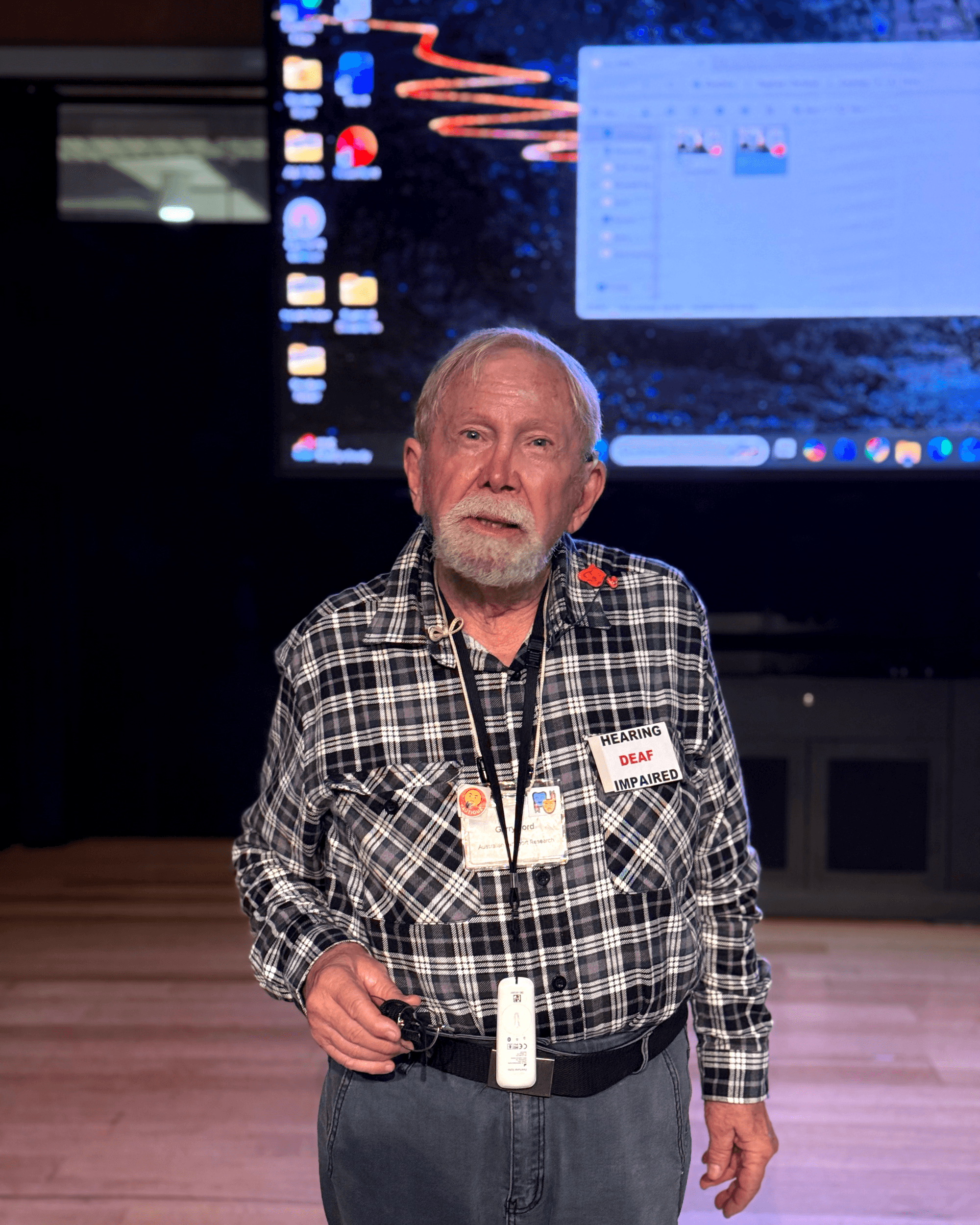
A man with a lifetime of phone numbers
I met Garry tonight. He is well into his later years, quick, funny, and, it turns out, the holder of decades of political contacts built over a lifetime in and around public life. He has shaken more hands in parliaments than most of us have shaken at parties.
He told me a story he found very amusing. He had been trapped by an AI system. Not a dramatic, science-fiction trap. The ordinary kind: an automated service line that would not understand him, would not connect him to a person, and kept returning him politely to the start of the same loop. He tried every option. The one labelled “speak to a representative” led nowhere useful.
What finally freed him was not a clever prompt or a hidden menu. It was a telephone call to someone he had known for thirty years, who knew someone else, who could quietly make the problem go away.
We both laughed. The cure for being trapped by an AI system turned out to be a lifetime of political contacts.
Then I stopped laughing.
Friction is a tax, and it is regressive
Because Garry could pay that price. Most people cannot.
Friction is a tax. When a system makes it hard to reach help, that difficulty is not free and it is not shared evenly. The confident, the connected and the digitally fluent find the side door and route around it. Everyone else pays in full: more time on hold, more dead ends, more being told to try the website, more quietly giving up.
It is a regressive tax, in the precise sense. It falls hardest on the people with the least to spare: the isolated, the unwell, the overwhelmed, and very often the old.
Who “everyone else” tends to be
Consider who absorbs that cost. The 2025 Australian Digital Inclusion Index found that two in three Australians aged over 75 are digitally excluded, 66.5 per cent of them. On the Index's measure of digital ability, over-75s score 41.5 out of 100, against a national average of 73.6.
Those numbers are not a story about people who are slow or unwilling. They describe people the digital world was simply not built for, who are now expected to negotiate, daily, with software that assumes they were.
When the only practical way to do something important, change an account, dispute a charge, correct an error, runs through a chatbot or a voice menu, a large group of Australians starts the task already behind.
The door that is promised and not provided
This is not only about the very old. It is about what automated service does to almost everyone when it is built to deflect rather than to help.
Recent surveys make the expectation gap plain. Eighty-nine per cent of people want a human option to always be available. Eighty-one per cent expect a bot to hand them to a person when it cannot solve their problem. Only 38 per cent say that handover actually happens.
So four in five people expect a door out, and fewer than two in five find one. The space between those two numbers is the friction tax, measured. It is the sound of a great many people knocking on a door that was painted on.
When friction becomes harm
There is a point where this stops being a matter of patience and starts being a matter of safety.
An automated summary that answers with total confidence and points a trusting person towards a scammer. A chatbot that gives a wrong instruction in a calm, authoritative voice to someone who has no way to check it. A system that quietly closes the only channel a vulnerable person had.
For most of us, a confident machine error costs an afternoon. For someone who is isolated, anxious or simply inclined to trust, it can cost their savings, or their sense that anyone is on their side.
Why we built the AI Incident Exchange
This is the gap the AI Incident Exchange exists to close.
It is a public place for anyone in Australia to report when an AI system has caused harm, or come close to it. A report takes a few minutes and needs no account. Reports are confidential and de-identified, and we never name the business involved.
We are not trying to shame anyone. We are trying to see patterns. When the same failure surfaces again and again, that repetition is a signal, and signals are how harms get found and fixed before they reach the next person who has no contacts to call.
For the businesses we certify, the Exchange adds a harder kind of accountability. A report about a certified business triggers our formal complaints process. The business must respond, and harm left unaddressed can cost it the certification. Trust that cannot be withdrawn is not trust. It is a logo.
None of this is anti-AI
It needs saying plainly: this is not an argument against AI.
Used well, AI can be the opposite of a friction tax. It can give a patient, plain-language expert to a person who would otherwise never reach one, at eleven at night, with no appointment and no fee. That is a genuinely good thing, and it is worth protecting.
The question is never whether the technology is impressive. It is who carries the cost when it fails, and whether they have anyone to call.
Back to Garry
Garry got his problem solved. He had thirty years of phone numbers to thank, and he knows it. That was the whole joke.
But the next person caught in that same loop will not have his contacts, and they should not need them. The real measure of responsible AI is not how well it serves the people who can route around its failures. It is how it treats the people who cannot.
People, as it happens, very much like the ones Garry was thinking about, even as he was laughing at himself.
Stuck, misled, or worse by an AI system?
Tell us. That is the entire point of the Exchange. In a country worth living in, being heard should not require a lifetime of political contacts.
Report an AI incident