Responsible AI Australia
Like Australian Made,
but for Responsible AI
How a school scandal, a centuries-old idea about trust, and a piece of mathematics led to a single, accountable symbol.
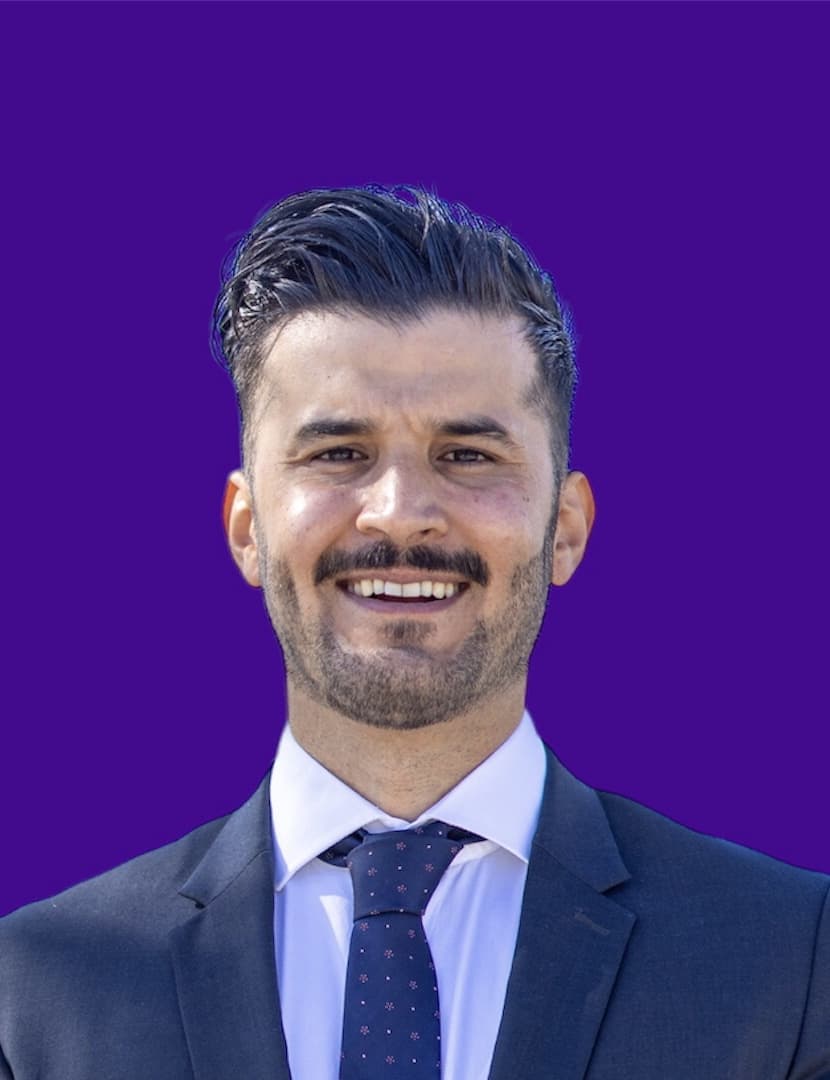
Syed Mosawi
Founder • May 30, 2026 • 12 min read
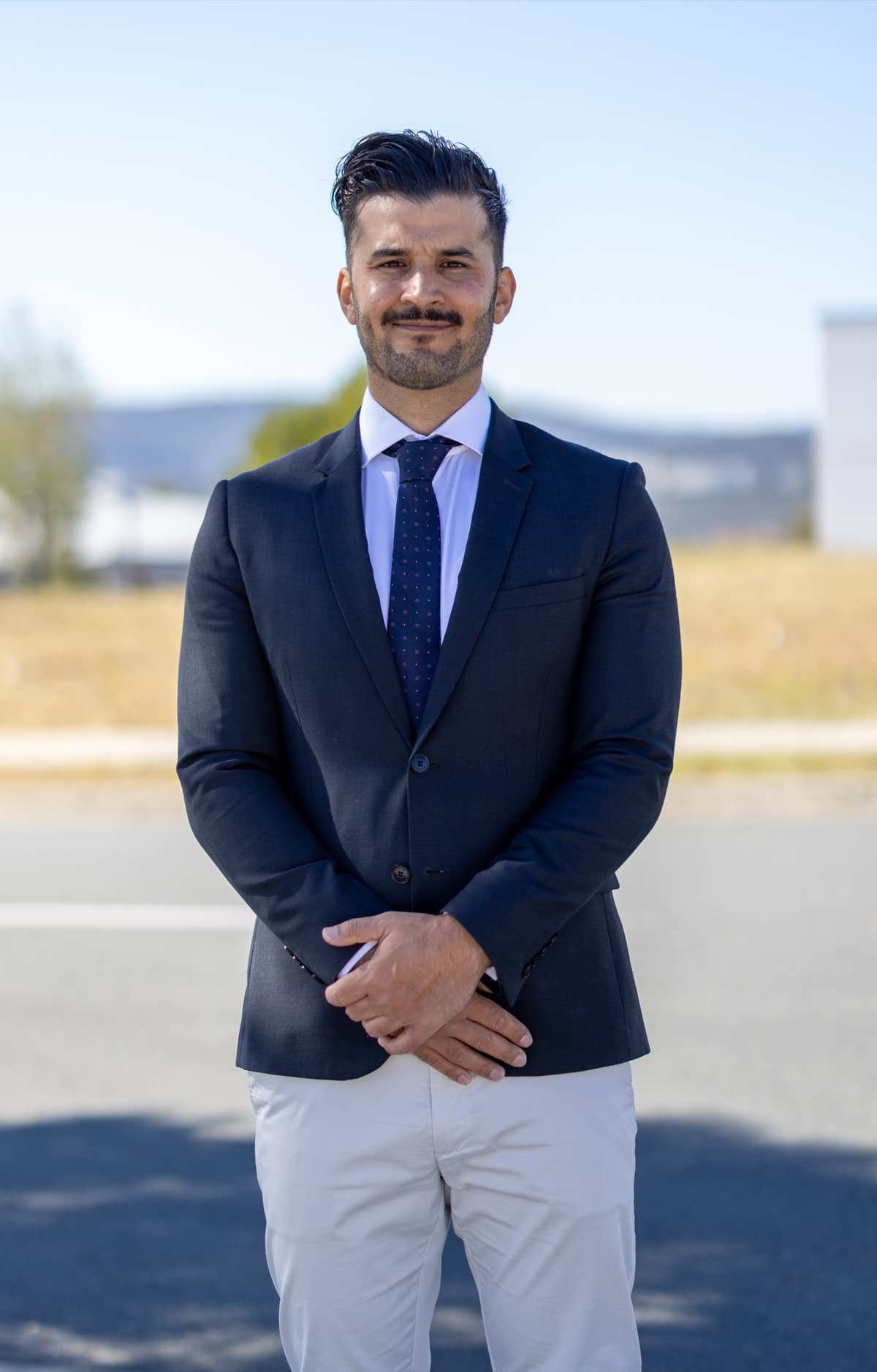
There is a moment most founders can point to. A line in the sand. Mine came in June 2024.
I read about what happened at a school in Victoria. A teenager had taken ordinary photographs from the social media accounts of around fifty female classmates and, using freely available AI tools, turned them into explicit images. He then circulated them. One parent, describing the moment they saw what had been made of their child, said they almost threw up.
I sat with that for a long time. Not as an attorney, not as a technologist, but as a person. What struck me was not that a piece of software had done something monstrous. Software does nothing on its own. What struck me was how little stood between an ordinary afternoon and an irreversible harm. No friction. No pause. No moment where anyone or anything asked, should this be done? The capability existed, it was a few taps away, and that was enough.
No friction. No pause. No moment where anyone or anything asked: should this be done?
I kept returning to one question. There has to be a way to mitigate the harms of AI, including the ones nobody intends. So what is a way? Not the way, not the whole answer, but one honest contribution that an individual could actually make.
Before I tell you what I built, let me tell you who was asking the question. Because the answer came from the strange collision of every part of my life.
A mind that refuses to pick a lane
I have never been able to stay in one discipline. I find something close to beauty in fusing fields that supposedly have nothing to do with each other, and watching a new idea fall out of the overlap.
One side of me is deeply technical. I love mathematics, physics, and microbiology. The single most profound idea I have ever encountered is the Fourier Transform, and I will defend that claim to anyone. It is genuine magic dressed up as mathematics. You take a signal that looks like meaningless noise, raw and uninterpretable, and you transform it into something clean and legible, decomposed into the simple frequencies hiding inside it. The thing was always there. You just could not see it until you changed the way you were looking.
It is genuine magic dressed up as mathematics.
And its reach is absurd. The same idea measures how fast bacteria swim. It sits at the heart of NMR spectroscopy. It reads the number plate of a car entering a car park. One mathematical lens, pointed at a thousand unrelated problems. I think that is the most beautiful thing about deep ideas: they do not respect the borders we draw between subjects.
The other side of me is unrepentantly creative. I love art, philosophy, and the act of making. That is why I became a registered trade marks attorney, a profession that lives exactly where commerce meets meaning.
Spend enough years protecting brands and you stop seeing logos. You start seeing something stranger and more powerful: that a symbol can carry trust. A mark on a product is a compressed promise. It says this is authentic, this is consistent, you can rely on what stands behind this. Humans have used symbols this way for as long as we have made things for one another, from the potter's stamp to the silversmith's hallmark. We are, at bottom, a species that runs on trusted signals.
A mark on a product is a compressed promise.
In that work I kept encountering a particular kind of mark: the certification trade mark. Australian Made. Australian Owned. What fascinated me was the machinery underneath. A certification mark is not a marketing flourish. Its rules sit with the ACCC, the national consumer watchdog. There is a published standard. There is an authority. The symbol means something because it is accountable to something. It is trust with a backbone.
So I had, sitting in the same head, a fascination with extracting clean signal from noise, and a profession built on the idea that a credible symbol can carry a promise between strangers.
Then came June 2024, and the two halves of me asked the same question at once.
The idea
If we want to encourage Australian businesses to use and build AI responsibly, what actually moves behaviour at scale?
Punishment is one answer, and it matters, but it always arrives after the harm. I wanted something that worked the other way, that pulled people toward doing right rather than only pushing them away from doing wrong.
The answer was sitting in my own filing cabinet. A symbol. A mark that is legally exclusive, governed by a real standard, and earned rather than claimed. A business that uses AI responsibly could carry it and say to its customers, we have thought hard about this, and we are accountable for it. And a customer, who otherwise has no way of peering inside a company's systems, could read that single symbol and know their service provider takes this seriously.
It is the Australian Made logic, redirected at the defining technology of our era. You cannot inspect a company's training data or audit their deployment decisions over your morning coffee. But you can recognise a trustworthy mark. That is the whole point of the Fourier Transform of trust: take something complex and unreadable, and compress it into one clean, legible signal.
That is Responsible AI Australia.
We are like Australian Made, but for Responsible AI.
A purpose-led Australian organisation, built on a simple conviction: that a credible, accountable symbol can carry a promise between strangers, and pull people toward doing right rather than only punishing them for doing wrong.
Some questions worth sitting with
What actually is “Responsible AI”?
In the literature, Responsible AI refers to the practice of designing, developing, and deploying AI systems in ways that are safe, transparent, accountable, fair, and aligned with human values, with humans kept meaningfully in the loop and harms actively anticipated rather than cleaned up afterward. The recurring pillars are fairness, transparency, accountability, privacy, human oversight, and safety.
Here is the part people find surprising. In Australia, there is no binding legal definition of “Responsible AI.” In December 2025, the National AI Plan confirmed that, for now, Australia will rely on existing laws and sector regulators, supported by voluntary guidance and a new AI Safety Institute, rather than introducing a standalone AI Act or immediate mandatory guardrails. What we do have is the Voluntary AI Safety Standard, built around ten voluntary guardrails that apply across the AI life cycle, and which deliberately does not create new legal obligations.
Read that again. The guidance is voluntary. The definition is unsettled. Which means the meaning of “responsible” is, right now, being decided in practice rather than in statute, by the choices of ordinary businesses and the standards a society chooses to hold itself to. That is not a gap to be embarrassed about. That is an open question we all get to help answer, and a reason a credible, accountable symbol matters now rather than later.
Do we even have a choice about using AI?
Less and less. AI now sits inside the search you run, the maps that route you, the bank that approves you, the feed that shapes your afternoon. We use it whether we choose to or not. The choice was made for us at the level of infrastructure.
But there is a deeper choice that no one can take away, and it is the one that matters. We may not get to choose whether AI is in our lives, but we absolutely get to choose whether we engage with it responsibly. We already accept this everywhere else. We expect to be responsible citizens, responsible drivers, responsible parents, responsible to each other. So here is the question I cannot get past: if we hold ourselves responsible in every other corner of life, why would our relationship with the most powerful tool we have ever built be the one place we let ourselves off the hook? Responsibility was never about having a choice over the technology. It was always about the choice over our own conduct.
What would you say to a software engineer right now?
Become multidisciplinary. I mean that as the most practical career advice I have, not a platitude.
Ask yourself the honest question: what can a human engineer do that the AI cannot? Sit with it, because the answer is your whole future. Do not aim to be merely a good engineer. Aim to be a leader. Get good at business, at sales, at marketing. Read history. Read philosophy. Study law. Make art. In other words, humanise your skills.
An AI can write the function. What it cannot do is hold conviction, feel the weight of a decision, sense in your gut that something is off before you can prove it, or stand at the intersection of five disciplines and see the idea that lives only in the overlap. Your intuition, your emotion, your particular tangle of experiences, these are not inefficiencies to be optimised away. They are the one thing in the universe there is exactly one of. The Fourier Transform was not powerful because it stayed inside mathematics. It was powerful because someone carried it across borders. Be the person who carries ideas across borders. That is the job no model takes from you.
Will AI help solve humanity's problems?
Yes. And it will create new ones. Both are true, and I think pretending otherwise on either side is a kind of dishonesty.
Think about plastic. A miracle material that transformed medicine, food safety, and manufacturing, and that is now in the deepest ocean trench and in our own bloodstream. Every powerful innovation we have ever made has followed this shape. It solves the problem in front of us and quietly authors the problem of the next generation. AI will be the most dramatic version of this pattern we have lived through. It will accelerate our progress enormously, and it will generate a growing catalogue of harms, many of which we cannot yet imagine. We are going to keep seeing new precedents of AI-related harm. I am fairly certain of it.
So what do we do? We try to future-proof without the benefit of hindsight, knowing it is partly impossible, and we do it anyway because the alternative is worse. The school in Victoria was not a failure of code. It was a failure to ask, what could go wrong here, and who pays for it? before the harm rather than after.
We cannot prevent every mistake. But we are not permitted to keep making the same one. That is the oldest moral law there is, older than any technology. We all share the burden of learning from what went wrong and making sure the next person does not pay the same price. A symbol that stands for that commitment, governed by a real standard and earned rather than claimed, is one honest way to carry that burden together.
Responsible AI Australia exists because of a teenager with an app, a watchdog-backed logo on a jar of honey, and a mathematical transform that turns noise into meaning. Three things that have no business being in the same sentence.
That is exactly the point. The answers we need are sitting in the overlaps. We just have to be willing to look across the borders.
Syed Mosawi
Founder of Responsible AI Australia, and a registered trade marks attorney. Building certification frameworks that help organisations operationalise their AI governance and earn trust.